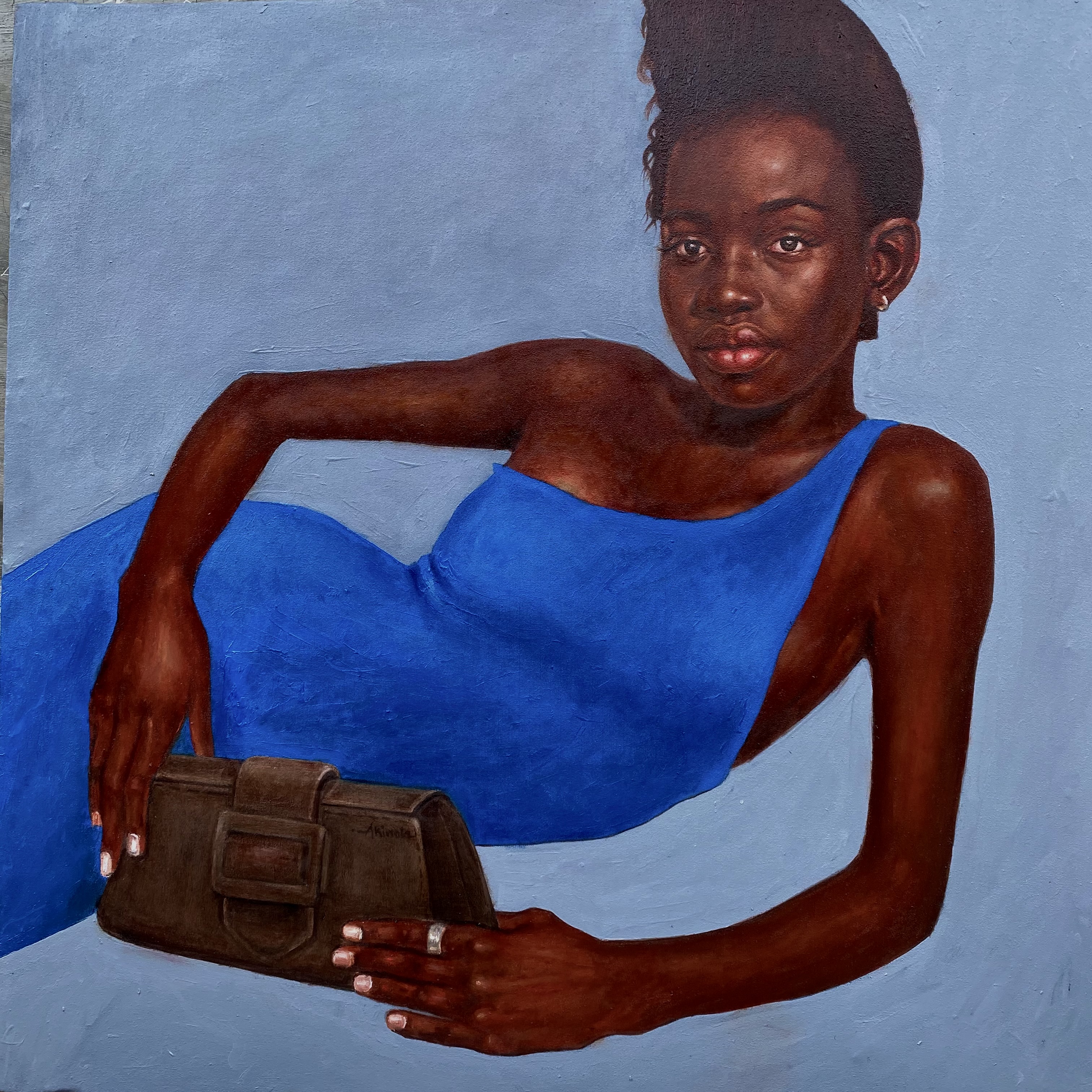
Silent desire
Akinboye Akinola
$1,600.00
Then the balance shifts. Nothing changes outwardly, but meaning accumulates unevenly.
What is offered no longer matches what is felt.
The space between becomes heavier than the interaction itself.
In the end, it is not rupture that defines it
but quiet misalignment that holds until it no longer can.
Oil... Read More
Akinboye Akinola
0 Followers
Akinboye Akinola (b. 1994, Lagos-based) is a contemporary figurative artist whose work explores psychological domestic reality through expressive, restrained visual language. Working primarily with acrylic and oil, he builds spontaneous compositions using simplified human figures and visibly handled brushwork, where emotion is communicated through posture, spatial tension, and atmosphere rather than polished representation.
A key element of his practice is the use of empty space, which functions as an active emotional field rather than background. These areas of absence heighten tension, isolation, and psychological weight within the composition.
His work focuses on internal human conditions shaped by cultural and domestic environments, including emotional restraint, relationships, absence, and unresolved psychological tension. Figures placed within minimal or simplified interiors exist in suspended states, suggesting narratives without fully resolving them.
His visual language is defined by strong directional light, intentional composition, and a spontaneous painting process that prioritizes immediacy and feeling over perfection or over-rendering. Within these restrained environments, selective symbolic elements—such as red roses—appear as emotional interruptions, introducing memory, desire, or fragility into otherwise quiet spaces.
Domestic objects such as chairs, beds, doors, and everyday elements function as symbolic traces of presence and emotional residue rather than decorative detail.
Recently, his work has expanded to include both male and female figures, maintaining the same psychological space while broadening the exploration of shared human experience within domestic and social settings.
Through this approach, his work emphasizes silence, psychological weight, and lived emotional experience over technical finish or realism.