THE LAND OF PROMISE
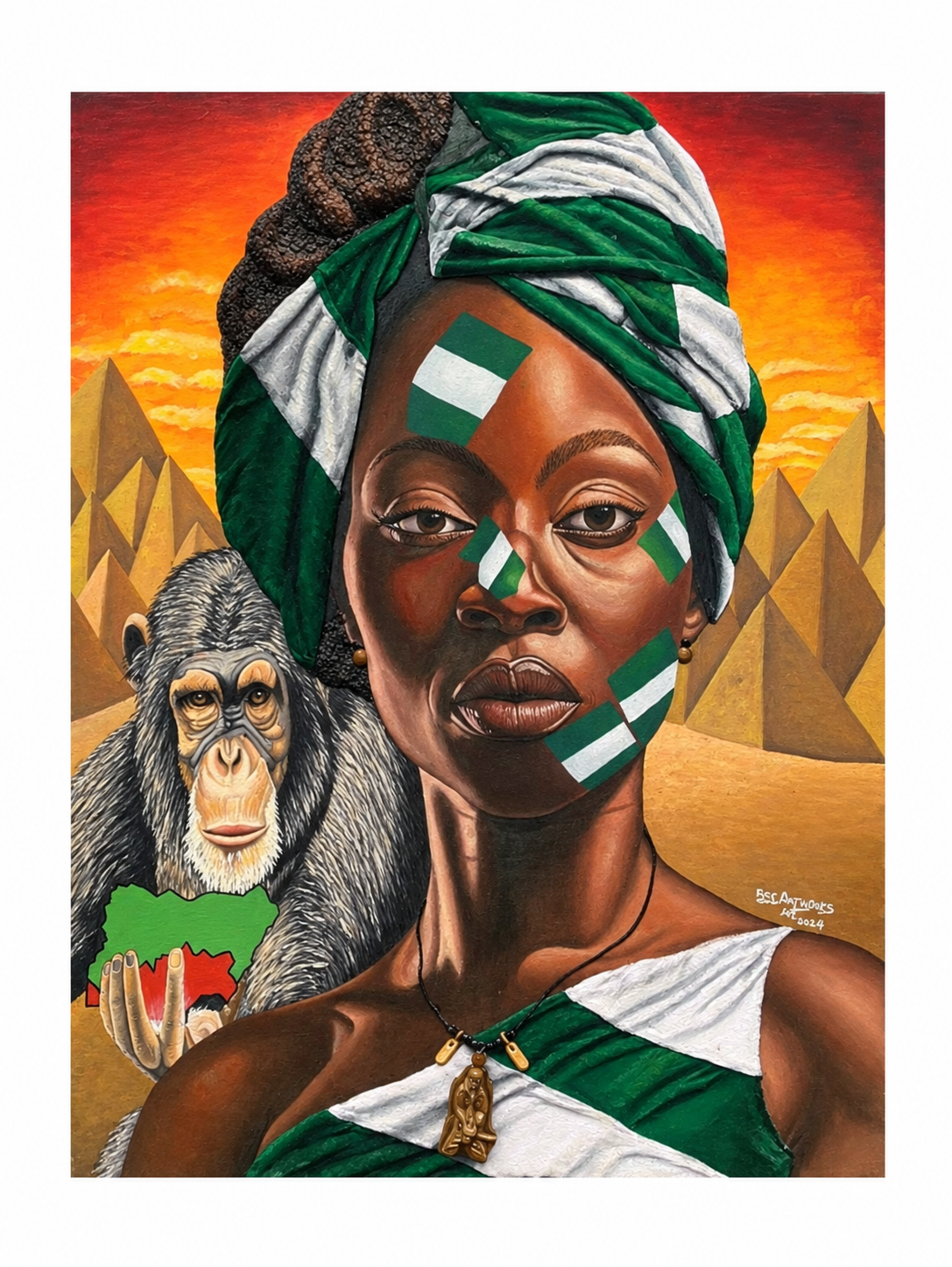
The Land of Promise is a mixed-media painting that examines the contemporary condition of Nigeria through symbolism, portraiture, colour, and cultural imagery. The work presents Nigeria as a nation with abundant human and natural resources, yet one that continues to face challenges such as insecurity, economic hardship,
... unemployment, inadequate infrastructure, and other social problems.
The title, The Land of Promise, represents the hope attached to Nigeria as a country with great potential. However, the painting questions the gap between this promise and the reality experienced by many citizens.
The sky is an important symbolic element in the composition. Instead of presenting a peaceful and hopeful atmosphere, it is dominated by intense red and orange colours. The red represents danger, bloodshed, fear, and the suffering associated with insecurity. It reflects the condition of a nation where violence and the loss of innocent lives have become serious concerns.
At the centre of the composition is a woman covered in Nigerian colours. She represents Mother Nigeria, the motherland that belongs to all Nigerians. Her sorrowful facial expression represents the pain, stress, and exhaustion carried by the nation and its citizens. Through her expression, the painting communicates the emotional burden of people experiencing economic hardship, insecurity, unemployment, poor infrastructure, and restricted freedom of movement.
The painting therefore raises an important question: How can a nation with so much potential become a place where many of its citizens struggle to experience security, opportunity, and prosperity?
The necklace worn by the woman is another important symbol. It represents bondage and slavery and connects Nigeria's present struggles with the historical memory of the transatlantic slave trade and colonialism. Although colonial rule ended, the necklace suggests that forms of oppression and exploitation can continue in different ways through social and political conditions.
The work also questions situations where citizens are offered temporary gestures, promises, or political appeals when their support is needed, while deeper social and economic problems remain unresolved. Through this symbolism, I express the belief that Nigerians should not be treated as subjects or slaves, but as citizens whose dignity, rights, security, and welfare deserve protection.
Another major element of the composition is the baboon. The baboon serves as a metaphor for selfishness and the abuse of power. Its relationship with the map of Nigeria and the reflective light from its palm connects it to the country's political power and resources.
The baboon therefore represents leadership that is perceived as placing personal interests above the welfare of the wider population. Its connection with the map of Nigeria creates an image of power over the nation and raises questions about who controls the country's resources and who ultimately benefits from that power.
The baboon also relates to the issue of insecurity. The painting contrasts the protection often surrounding people in positions of authority with the vulnerability experienced by ordinary citizens. While citizens may live with fear caused by kidnapping, robbery, and other forms of violence, people in positions of authority may have greater access to security. This contrast raises questions about the unequal experience of safety within the same nation.
The barren and desolate landscape is another central symbol. It represents Nigeria's enormous potential, while also suggesting that this potential is not being fully transformed into prosperity for everyone. The barren land becomes a metaphor for opportunities that exist but remain difficult for many citizens to access and benefit from.
This symbolism is particularly connected to graduate unemployment and economic hardship. Young Nigerians may spend many years pursuing education with the hope of building productive and successful futures. However, when suitable employment opportunities are unavailable, their efforts can appear unrewarded. This situation raises concerns about how Nigeria can better transform the education, skills, and potential of its young population into meaningful opportunities.
Ultimately, The Land of Promise is a visual reflection on Nigeria's struggles, potential, and future. The work calls attention to the need for security, responsible leadership, economic opportunity, equality, development, and the protection of human dignity.
Through this painting, I ask: If Nigeria is truly a land of promise, when will that promise become a reality for its people? Read More
Materials
Acrylic, spray paint, terracotta sculpture,bead, clothe materials and paper-mache
Signature
Mojereola Awal Ishola
Certificate
Includes a Certificate of Authenticity